Is It Safe to Walk on My Adelaide Roof? (Spoiler — Probably Not)
Walking on your Adelaide roof — safety, fall risk, tile vs Colorbond, when DIY is acceptable, why most jobs need a roofer.
Published · Updated · RidgeFox Roofing
The honest answer
For almost every Adelaide homeowner, the answer is no — don’t walk on the roof. Falls from height are the #2 cause of fatal home-improvement accidents in Australia (after electrocution). The risk is real, the cost of getting it wrong is permanent, and the cost of having a roofer do the job is far less than ER bills.
Tile roof — high break risk
Concrete and terracotta tiles will crack under a 100kg adult standing on the wrong spot. The ‘right spots’ (over rafters and battens, where the tile is structurally supported) are not visible from above. Even experienced roofers occasionally crack tiles. A homeowner walking on a tile roof to hang Christmas lights typically cracks 2-5 tiles, each $300–$500 to replace.
Colorbond / metal roof — slip risk
Colorbond is much harder to break than tile. The risk is slipping — particularly on Trimdek (the standard residential profile) which has a smooth flat-pan surface. Wet Colorbond is genuinely dangerous to walk on. Steep pitches (25°+) require fall arrest equipment regardless of dry conditions.
When DIY is sometimes acceptable
Single-storey, low-pitch roof (less than 20°). Dry conditions. Proper non-slip work boots. A spotter on the ground. A harness anchored to a known structural point (most homeowners don’t have this). And a clearly bounded task (e.g. clearing a single visible blockage from a gutter end). Anything beyond that — call a roofer.
What’s never DIY
Steep pitches over 25°. Two-storey work without scaffolding. Working on tile roofs (break risk + age uncertainty). Wet roof conditions. Asbestos cement roofs (don’t disturb). Anything within 2m of the edge without fall arrest. Inspection of suspected leak source (the roofer’s diagnostic time is the value).
Proper safety equipment
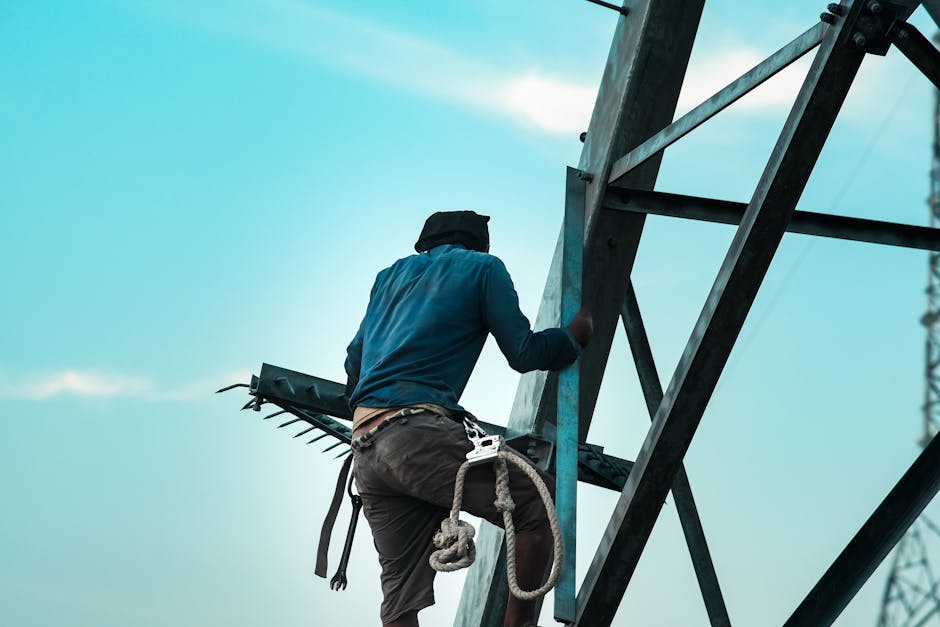
Industry-standard for any roofer: safety harness anchored to certified anchor point, fall arrest lanyard, non-slip work boots, hard hat, safety glasses. Two-storey or steep-pitch jobs add scaffolding, edge-protection rails, and ground-level exclusion zone. SA WHS requires this on commercial work; reputable residential roofers use it too.
Costs of getting it wrong
Roof fall (1.5m or higher) commonly causes broken bones, concussion, spinal injury. Adelaide ambulance + ER + ortho costs run $5,000–$50,000+ depending on injury severity. Permanent disability is possible. Home insurance won’t cover injury to a non-employee. Workers compensation only covers paid employees. The financial exposure is multiples of any DIY savings.
Annual gutter clean — the most-DIYed task
If you must DIY this: extension ladder on level ground, ladder stabiliser, leather gloves (for sharp metal edges), gutter scoop. Don’t reach far from the ladder; reposition the ladder instead. Don’t work alone. Don’t do it on a steep block where the ground is uneven. Most Adelaide homeowners are better served by paying $250–$450 for a proper gutter clean every 12-18 months.
When to definitely call a professional
Inspection of any suspected leak. Replacement of any tile. Ridge cap work. Valley iron repair. Any sealant work at penetrations. Solar panel mounting/unmounting. Any work at edges. Two-storey work. Anything that requires walking on Colorbond. Almost all of these are quoted $300–$1,500 for a professional roofer — well below typical fall-injury costs.
Get a free quote
Request a free roof inspection or repair quote — we climb safely (proper harness, anchored), photograph the situation, and quotes the work. The site visit is free if the work proceeds.
Get a free Adelaide roofing quote within 24–48 hours
Tell us about your roof. We'll get back to you within 24–48 hours with a written, itemised quote. No obligation.